

Welcome to the first Rediscover Physio newsletter of 2026! You might have noticed that we didn’t run a December edition because, well… things got busy. Sound familiar?! But – we’re back – and more eager than ever to help you kick goals this year! And if 2026 goes anything like Australia’s Ashes result, we can truly help you kick your goals clean out of the park.
And in case you don’t plan on reading to the end (we get it, reading isn’t for everyone!) we’ll start by saying a heartfelt thank you for your support in 2025. From our team to you, we hope we’ve helped you Rediscover Your Potential and move a little easier this past year. Whether it’s keeping up with grand children or chasing performance in your elite sport, we’re grateful to be a part of your journey.
In this addition, we’re diving into incontinence (yes, incontinence!), how to reduce lingering stiffness if you’ve had a long drive (hello Syndey/Melbourne!) and highlight just how many areas Physios can help with – the list might surprise you. Plus, we bust a common myth about cracking joints!
Let’s bust some women’s health myths!
Because if we had a dollar for every time we heard “I thought that was just normal…” we’d all be retired by now.
Here are 6 of the biggest misconceptions we hear in clinic – and they might surprise you.
1. “It feels like it’s just me…”
How common is incontinence, really?
Short answer: very.
Over 7.2 million Australians experience incontinence – that’s around 1 in 3 adults and many are under 65. So no, this isn’t “just an ageing thing,” and it’s definitely not just you.
The good news? Incontinence is common, treatable and very responsive to the right care. You don’t have to put up with it, plan your day around it, or quietly hope it improves on its own.
2. “I’m that person who always needs to pee…”
What’s actually normal?
Let’s talk frequency. Most people pee somewhere between 4-10 times a day – yes, that’s a big range.
How often you go depends on things like body size, fluid intake (hello coffee), activity levels and even stress. Urine colour can also tell us a lot about hydration.
What’s “normal” is individual – but if you’re constantly thinking about toilets, we can help you understand what’s going on and how to improve it.
3. “I worry about leaks and urgency…”
Can I simply blame aging?
A little – but not entirely.
Age, pregnancy, childbirth and hormonal changes (especially around menopause) do affect muscle elasticity. But here’s the key point:
Age explains it. It doesn’t excuse it.
If bladder symptoms are affecting your confidence or day-to-day life, there is plenty we can do to help you regain control.
4. “I don’t want an intrusive appointment…”
Is there an internal exam?
Short answer? No.
Long answer? Still no – unless you want it.
We start with a thorough chat and assessment. We might feel muscle activation by placing our hands just next to where you put your hands on your hips, externally and over clothing. Internal exams are never required and are never done without your consent.
There are always alternative ways to reach your goals – your comfort comes first.
5. “I’m pregnant – should I stop training?”
Absolutely not.
You shouldn’t start anything brand new or suddenly increase your training load, but staying active is not only safe – it’s beneficial.
Research shows that good pelvic floor control can reduce the length of the second stage of labour and lower the risk of pelvic tearing. And no, it doesn’t increase risk to your baby or negatively affect delivery.
Cue the age-old advice that still rings true – listen to your body. You’ll likely modify how you train as pregnancy progresses – and that’s exactly what we expect.
6. “Menopause means everything goes downhill… right?”
Wrong.
Yes, the body changes – but movement, strength training (hello gym!) and nutrition can dramatically reduce how much those changes impact daily life.
The research is clear: strength-based exercise improves function, confidence and quality of life as we age. And it’s never too late to start.
Never tried a gym class before? Let 2026 be the year you give it a go.
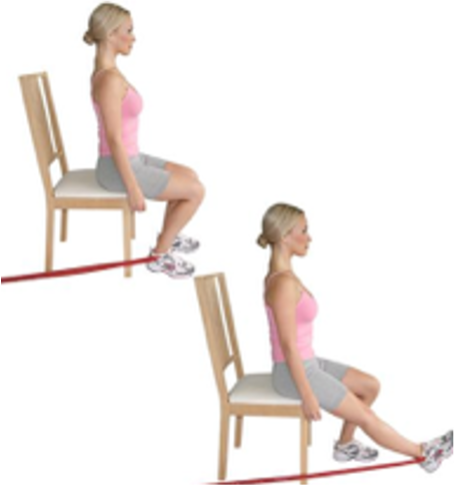
Exercise of the week – ‘Seated Knee Extension’
Got a long drive coming up? If so, your knees, hips and sciatic nerve might soon be saying “hello” (and not in the friendly way).
Whether you’re heading interstate, sitting in Brisbane traffic or just spending more time behind the wheel than usual, long periods of time can leave you feeling stiff, sore and a little creaky when you finally step out of the car. If you’ve ever taken those first few steps thinking “wow, I’ve aged 10 years!” this one’s for you.
How to do it? Sit up tall in a chair and loop a resistance band around your ankles. Keep one foot firmly planted on the floor. Slowly straighten the other knee against the resistance, then return with control. Sway sides. Repeat 10 times for each side. This should provide you with some relief!
Why we love this exercise? This simple exercise:
· Strengthens your quadriceps
· Improves knee stability
· Encourages circulation
· Helps reduce stiffness through the lower back and sciatic nerve
In other words, it targets all the areas that tend to complain after a long drive.
Bonus road-trip tips!
While you’re driving (safely of course!), small movements can make a big difference.
· Change posture regularly, slump back, then sit tall
· Move your legs in the footwell when stopped
· Curl and spread your toes
· Gently tense and relax different muscle groups
These little adjustments help increase blood flow and make those first few steps a little kinder on your body.
Just how far reaching is the scope of physiotherapy?
Physiotherapists don’t just treat sore backs and rolled ankles. Think of us as the Swiss army knife of the health care – adaptable, practical and useful in far more situations than people realise. Here’s a snapshot of just how many areas physiotherapy can support:
· Cardiorespiratory
Support for heart and lung conditions such as COPD, Emphysema and Cardiomyopathy. We use breathing retraining, airway clearance techniques and target exercise to improve oxygen efficiency – so everyday tasks feel less exhausting.
· Women’s and Men’s health
Pelvic floor support, incontinence, pregnancy and post-natal care, prostrate rehabilitation and more. These conversations are handled with sensitivity, respect and complete privacy – and yes, we talk about this stuff every day.
· Neurological
Support for stroke recovery (at every stage), Parkinson’s disease, nerve pain, chronic pain, amputations and developmental disabilities. Our goal? To help reconnect the dots so movement feels smoother, safer and more confident.
· Disability
From Autism to Paraplegia and beyond, physiotherapy supports strength, coordination, independence and confidence – always centred around meaningful personal goals, not just exercises for exercise’s sake.
· Mobility and Healthy Ageing
Helping older adults stay mobile, independent and thriving. Movement, strength and confidence are key ingredients for ageing well – and bonus points: our classes are social, supportive and genuinely fun (because connection matters too).
· Balance and Vestibular
Support for dizziness, vertigo and balance issues – helping you feel stable, safe and confident again, without that constant fear of losing your footing.
· Paediatrics
Helping children with developmental delays or disabilities grow, move and participate more fully in life – from playtime to school and beyond.
· Musculoskeletal – the one you probably know best!
Muscles, bones, joints, sprains, fractures, tears, niggles and aches – all the classic physio favourites we’re famous for!
The takeaway? If movement is part of the problem, physiotherapy is often part of the solution. Sometimes in ways people never expect!
Behind the scenes
Lucy (our incredible Exercise Physiologist) recently ventured to the other side of the Earth (whoops we meant continent – Perth!). She swapped the warm waters of the Sunny Coast for the freezing oceans of WA, interactions with cute quokkas, time with friends and soaking up the stunning West Coast scenery. Safe to say, we’re only a little jealous.
We also have exciting news! We have just welcomed a new Physio to our talented team – Alex! Born and bred in England, Alex has spent the last year living and working in Australia. He has a keen interest in sports physiotherapy, works as an outpatient physio at Noosa Private Hospital and keeps fit with a local football club. We’re thrilled to have him on board and hope you meet him soon (just don’t mention the cricket to this poor English man!).
Your Questions Answered!
Hey Rediscover team,
Is cracking my joints bad for me? I’m into my fifties and still don’t have a definitive answer! I’ll admit, I’ve been doing it my whole life.
Thanks,
Ron
Hey Ron!
Great question – and one we hear all the time!
The good news? Cracking or popping your joints doesn’t cause damage, arthritis or long-term harm. That popping sound is simply gas (air) moving quickly within the joint due to changes in pressure – often linked to muscle tightness, weakness or not enough movement.
If the cracking is pain-free, there’s no need to worry.
If it’s annoying, frequent or comes with pain/stiffness, that’s where we can help by improving movement, strength and joint control.
So yes… if it’s painless, you can officially crack on. 😉
Need a little extra support?
If incontinence or pain after long drives is making everyday life more difficult, we’d love to help you move with more comfort and confidence. Book in today with one of our Rediscover team members.
And if you’ve made it all the way to the end of this Newsletter – thank you. We genuinely appreciate your ongoing support and trust in our team. Here’s to a strong, active and confident 2026.
The Rediscover Physio Team
January Newsletter – Let’s bust some women’s health myths!