

Women's Health Physio for Incontinence
Bladder dysfunction refers to range of problems affecting normal functioning of the bladder.
Bowel dysfunction refers to a range of problem affecting normal functioning of the bowel.
Women's Health and Incontinence Needs
Are you looking for an experienced Women’s Health Physiotherapist in Coolum Beach on the Sunshine Coast to support you with your incontinence needs?
At Rediscover Physio, our Women’s Health Physiotherapist has done extra training in bowel and bladder incontinence. Allowing her to provide evidence-based, compassionate care tailored to each stage of life. We focus on understanding the whole picture — your symptoms, goals, lifestyle, and movement — to help you rediscover confidence, comfort, and control in your body.
Don't be held back by a sneeze!
Urinary incontinence has been shown to impact up to 50% of Adult Women. It can lead to women avoiding exercise, social activities, work events, or even simple actions like laughing, lifting, or sneezing due to fear of leakage.
Bladder Dysfunction
This can include various conditions including but not limited to conditions outlined below:
- Overactive Bladder (OAB) – Characterised by a frequent and urgent need to urinate, often accompanied by urinary urgency and sometimes urinary incontinence.
- Bladder outlet dysfunction – Any condition that obstructs the flow of urine out of the bladder, such as pelvic organ prolapse in women, can lead to symptoms of bladder dysfunction, including difficulty starting or maintaining urination.
- Incomplete emptying – Difficulty fully emptying the bladder during urination, which can lead to residual urine and increase the risk of urinary tract infections (UTIs)
- Urinary Incontinence
Urinary incontinence is the involuntary leakage of urine. There are several types of urinary incontinence, Stress urinary incontinence (SUI), Urgency urinary incontinence (UUI) and Mixed urinary incontinence (MUI) being most common. The other types are overflow incontinence and functional incontinence.
Stress urinary incontinence (SUI) is the complaint of involuntary loss of urine on physical exertion, eg, with exercise, or day to day activity (getting in and out of the bed), sneezing or coughing.
Urgency urinary incontinence (UUI) is the complaint of involuntary loss of urine with urgency, e.g, not making it in time to the toilet.
Mixed urinary incontinence (MUI) is a combination of Stress and urge urinary incontinence.
Urinary incontinence is much more common in women than in men.
What causes it?
Pelvic floor muscles, ligaments and fascia support the pelvic organs, they can become weaker over time, causing to experience leakage issues as you get older. Pelvic floor muscles can also be affected during pregnancy, Childbirth and menopause causing to experience leakage.
Weakness of the pelvic floor muscles is a common reason for the loss of this control, which can cause incontinence. The other reasons may include but not limited to bladder control issues, UTI’s, Medications, Beverages (coffee / alcohol), constipation, enlarged prostate, diabetes etc.
Is Physiotherapy management of female urinary incontinence really just pelvic floor muscle training?
Lifestyle interventions such as weight reduction in obese women and bladder training have shown promise in reducing Urinary incontinence (UI) symptoms. Weight reduction can alleviate pressure on the bladder and pelvic floor muscles, while bladder training can help improve bladder control and reduce urgency. However, the effectiveness may very depending on individual circumstances, and its important to consult with a healthcare professional for personalised advice and treatment options.
Surgery carries a risks of complications, including infection, urinary retention, and injury to surrounding structures. Additionally, the long-term outcome is questionable. Therefore, surgery is usually considered after other non-invasive or lifestyle interventions have been attempted and when the benefits outweigh the risks for the individual patient. The NICE guideline states that pelvic floor muscle training is just as effective as surgery for approximately half of women with SUI.
This leaves pelvic floor muscle training (which has level one evidence that it should be first-line treatment for UI in women) as the main intervention in physiotherapy for UI.

What to expect during an Initial Consult
Conducting a 45-minute initial appointment allows for a detailed history-taking session, which is crucial for understanding the patients individual circumstances and concerns. The assessment, including a vaginal/rectal exam upon consent, functional and musculoskeletal assessment, and questionnaire, provides a holistic view of the patient’s health status.
Based on the diagnosis and findings, treatment options such as bowel and bladder management strategies, diary tracking, and pelvic floor muscle training can be tailored to address the specific needs of the patient. This personalised approach can lead to more effective outcomes in managing Women’s Health issues.
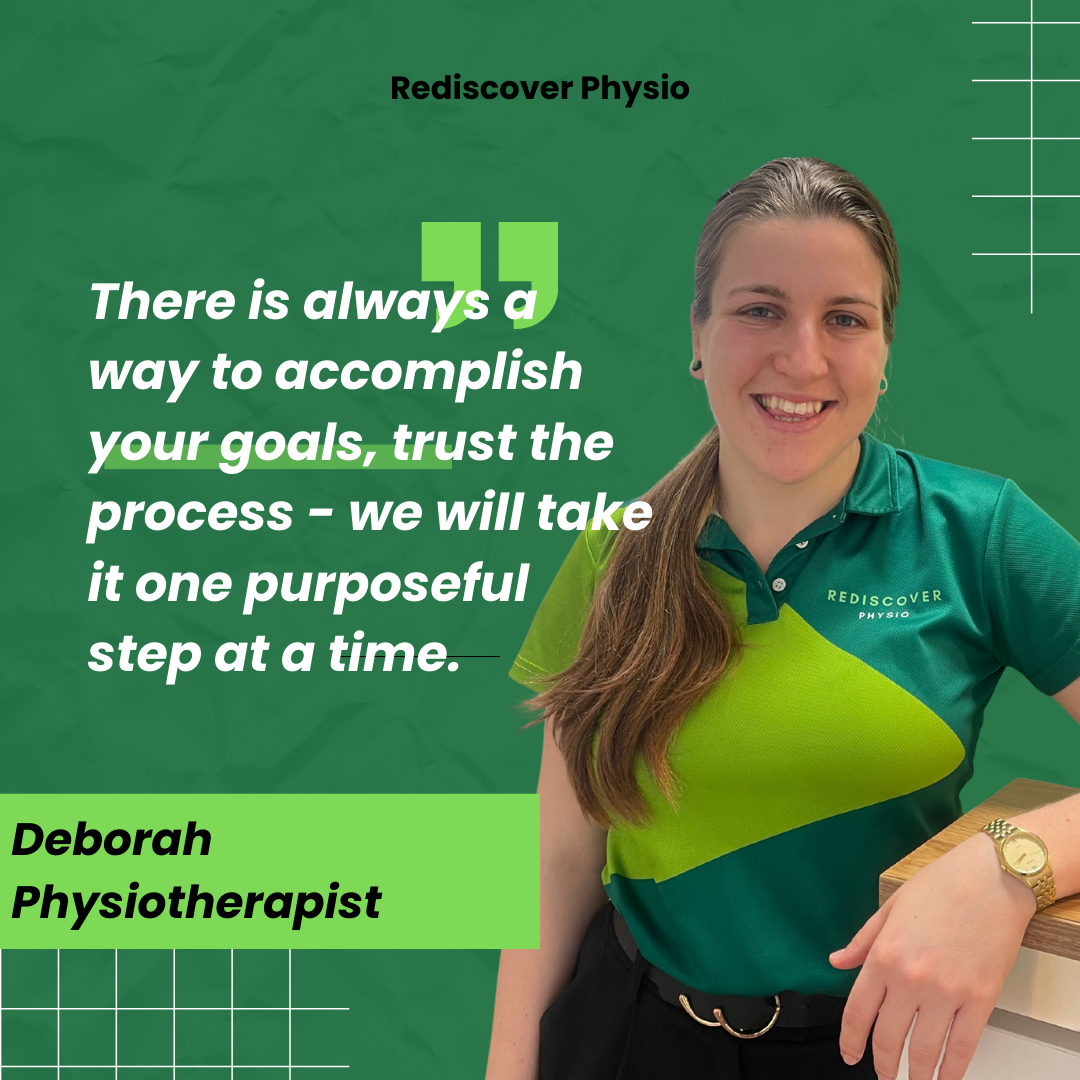
Deborah Walker
- Physiotherapist
- Bachelor of Physiotherapy (Australian Catholic University, NSW) | APA Level 1 Women's Health Course
Deborah is a highly qualified physiotherapist with advanced training in Women’s Health, bringing both deep clinical expertise and a warm, supportive approach to every patient she works with. After completing her Bachelor of Physiotherapy, she pursued further training in Women’s Health – reflecting her commitment to providing the highest quality care across pelvic health, pre and post-natal rehabilitation, continence concerns and women’s musculoskeletal conditions.
Highly motivated to deliver excellence, Deborah began building her clinical experience early by working as a Physiotherapy Assistant while completing her degree. Her training took her across Australia, working alongside experienced physiotherapists in rural hospitals, Indigenous Health Centres and Acute Care Wards. This broad exposure has given her a rich skillset and a deep understanding of the divers needs across all ages and circumstances.
At Rediscover Physio, Deborah supports a wide range of patients including DVA, Medicare, WorkCover and Aged Care clients helping them to reduce pain, restore confidence and achieve meaningful outcomes. Driven, knowledgeable and genuinely dedicated, Deborah is also committed to helping women discover their strength, confidence and potential – so they can live each day with less pain, greater ease and a renewed sense of capability.
Deborah’s personal experience in sports including her passion for Aerial Circus and Netball has given her firsthand insight into injury, recovery and the determination required to return to full function. She brings this lived understanding into her practice, offering empathetic guidance and unwavering support to every patient.
Are you suffering from Incontinence?
If you are suffering from a incontinence, call Rediscover Physio. Our Physiotherapists are experienced with the assessment, management and treatemnt of incontinence and can advise you whether physiotherapy can help.
Bladder Dysfunction
This can include various conditions including but not limited to conditions outlined below:
- Functional Bowel disorder – These include disorders such as pelvic floor dysfunction, where there’s impaired coordination of pelvic floor muscles leading to difficulty with bowel movements or fecal incontinence.
- Obstructed defecation – characterised by difficulty with passing stools due to structural or functional abnormalities in rectum or pelvic floor muscles.
- Constipation / diarrhoea
- Bowel Incontinence – Bowel/Fecal incontinence is the involuntary leakage of stool.
These are just a few examples, and there can be overlap between different types of bowel dysfunction. Proper diagnosis and management often require a thorough evaluation by healthcare professionals, including gastroenterologists, GP, colorectal surgeons, and physiotherapists, to determine the underlying cause and develop an appropriate treatment plan.
Physiotherapy plays a valuable role in managing bowel dysfunction by addressing underlying musculoskeletal and pelvic floor issues. There are some ways physiotherapy can help: Pelvic floor muscle training, Bowel retraining, Manual therapy, Education and lifestyle modification, Behavioural strategies.. By addressing these aspects of bowel dysfunction, physiotherapy aims to improve bowel control, reduce symptoms, and enhance overall quality of life for individuals dealing with these issues.
